Featured Post

Look inside #mylittlebookcase? (A Book-a-Day Instagram Game)

It goes without saying that we love books here at My Little Bookcase. There are hundreds and thousands of wonderful books written for children and families, but sometimes I feel like we only scratch the surface for you; especially of late. There just doesn’t seem to be enough time in my days  to feature  all [...]

Read more →

Ideas for Using, Exploring and Enjoying Wordless Picture Books.

How to use wordless picture books

(This post was originally part of a feature written for Issue 2 of Tiny & Little Magazine)

Take a look at this comprehensive list of wordless picture books.

WORDLESS PICTURE BOOKS ARE NOT JUST FOR BABIES

Wordless picture books show no favouritism. They can be as simple or as complex as the reader makes them. They are suitable for people of all ages, genders, cultures, languages and reading abilities. They are great for:

-Babies who are learning the concepts of books (turning pages etc.).

-Toddlers who enjoy telling their own stories and looking at pictures for clues.

-Early readers who are beginning to understand the sequence and structure of stories, and who are developing a confidence in reading.

-Independent readers who can be offered challenges in how they use a wordless book to develop their reflection and vocabulary.

-Readers with learning or language difficulties. Because there are no language hurdles for them in the book, they can understand the story line and build their confidence in reading.

WE ARE COMPELLED TO SPEND QUALITY TIME WITH A WORDLESS PICTURE BOOK

  • — Because there are no words, there are also no cues for page turns. Readers can pore over and admire each page for hours if they wish, without interrupting the rhythm of the story.
  • — Readers often feel compelled to go back and re-read a wordless picture book, to look for clues in the story or to help them make more sense of the story.

WORDLESS PICTURE BOOKS ENCOURAGE REFLECTION AND DEVELOP OUR SKILLS AND KNOWLEDGE AS A READER:

  • —The illustrator gives the reader a licence to interpret the illustrations. The reader is invited by the illustrator to contribute to the plot and messages of the story.
  • —Readers must reflect on their own experiences to make meaning from the illustrations.
  • —They assist in the development of imagination and creativity
  • — They get the brain ticking, as there are often many possibilities or layers to the story.
  • —Wordless picture books often have circular storylines. There may not be a particular start or end to the story. The reader can feel like the story is unfinished and it is up to them to decide what will happen next.
  • —They help children to become more thoughtful and reflective readers, as they develop the ability to interpret, infer, predict and analyse aspects of the story. These skills can then be transposed when reading other styles of books.
  • —They allow readers to practise speaking, by communicating and verbalising their ideas and thoughts of the story.
  • —They support the reader in learning about particular features of books, such as sequence of events and cause and effect.

WORDLESS PICTURE BOOKS PROVIDE ENJOYMENT

  • —The reading of a wordless picture book can promote one-on-one time with a parent or friend. Readers need to be able to look closely at the illustrations because they are so detailed. For this reason, it can be difficult to share a wordless book with a group of children.
  • —They are an invitation for discussion. You can’t help but ask questions and share your opinions.
  • — They allow a reader to listen to other points of view as the story one reader constructs is not necessarily the same as the story another reader constructs.

12 WAYS TO ENJOY WORDLESS PICTURE BOOKS

1. Take a Picture Walk through the book with your child. Without attaching any story to the illustrations, simply look at the details in each page and talk about what you see.

2. Model the story-telling for your child. Use the pictures to create a story. Read the story a number of times. Each time you read the book, develop a different storyline.

3. Without showing the title of the book to your child, use the illustrations to create a story together. Ask your child to create a title of their own for the book.

4. At certain points during the book, invite your child to predict what will happen on the next page.

Predicting the next page, mirror by Jeannie Baker

5. Write a word list for the book. Think of words that could appear on each page. Write these words on post-it notes and attach them to the relevant pages.  You could do this activity a number of times, using a different category for words each time. Eg.

-        Feelings and thoughts of the characters

-        Dialogue between characters

-        Actions/verbs

-        Adjectives to describe setting or characters

-        Events that are taking place

-        Prepositions (eg. on, over, across)

You could then extend this activity by using the thesaurus to find alternative words for the ones recorded on the post-it notes.

Emotions in The Chicken Thief

6. Use the words from Activity 5 to construct sentences. Choose one page in the book and write a paragraph for it. Or your child might like to write the whole story.

7. Let your child dress up as a character in the book. Let their imagination take over.

8. Act out part or all of the story. If there are enough characters in the story involve the whole family.

9. Choose a picture in the book and ask each other questions about it.

10. Talk to your child about what you each think the story is about. Find similarities and differences between your ideas.

11. Share your favourite pages with one another and explain why it is your favourite.

12. Invite your child to create their own wordless book.

Find a wordless picture book here.

Pretend Bookshops: Developing comprehension skills through play


There are ways to help children develop comprehension skills without bombarding them with test-like questions and cloze activities.

Playing pretend bookshops is one way for children to authentically demonstrate their understanding of books and stories, but it mainly encourages them to start thinking about books and what is presented to them through words and images.

Take a look at how play and learning took place for my daughter, Cam.


Out of the blue, Cam set up this scene one evening, just before bed.

She told me that it was her bookshop, and she asked me to leave it overnight so she could continue playing in the morning. Of course I left them out, and they stayed there for quite a few days.

A few days later, we attended The Little Bookroom for a special story time. Cam was captivated by Elvira’s storytelling.

Cam was inspired, and decided that her bookshop needed a storytime too.  She set up space for the storytime and the local children flocked to listen to her stories:

Cam talked to the children about books (she needed a microphone to do this) and even asked me if she could hand out lollies at the end of the session.

She picked out her books and read them to the children. (I just loved listening to her speak, rhyme, and interpret the illustrations). Reading to soft toys gives children the opportunity to mimic what they see and hear when you read to them.

Cam instigated this playful scene, and I helped use the play to develop her comprehension in a fun (and subtle) way.

I asked her to offer some book recommendations to the children:

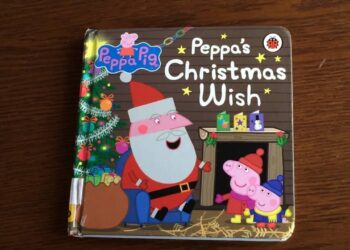
Rookie likes to read about animals. Cam recommended:

Sandy has been fighting with his best friend. Cam recommended:

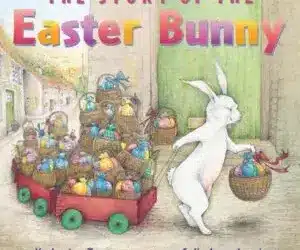
Jemima Puddle-Duck is looking forward to Easter. Cam recommended:

The children seemed happy with the recommendations:

Without asking her a series of comprehension questions, her book choices highlighted her knowledge of the themes, characters and messages in the books we regularly read in our home.

Her pretend bookshop has been the flavour of the month for Cam. We’ve played lots and it’s given me the chance to ask lots of questions. Some of them include:

  • I’m looking for a book about baby brothers. Do you have any?
  • My friend likes fairies. Do you have any books that she might like?
  • Do you sell any books by Nick Bland?
  • Do you sell any books illustrated by Freya Blackwood?
  • Do you have a book that will make me feel happy when I read it?
  • I like this book. Do you have any others that are like this one?

After some reluctance, Cam eventually let me purchase some of her books.

HOW DO YOU GET YOUR CHILDREN THINKING ABOUT BOOKS?

An Illustrated Year 2013 Calendar: About Sally Rippin (Miss April)

Interview with Sally Rippin

About April’s Illustration:

Boy, Book, Bird‘  was an illustration commissioned by the Department of Education for the Premier’s Reading Challenge poster a few years back. They didn’t end up using it so I was happy that it found a home in the calendar.


How did you create this image?

Collage, charcoal pencil and coloured pencil. The leaves are cut from an old Thesaurus.

About the illustrator:

Sally’s artwork is influenced by Chinese aesthetic and composition due to the time she spent living and studying in Shanghai. She has written and illustrated over 50 books for children. Many have received literary commendations including The Rainbirds, which received an honour for CBCA Picture Book of the Year in 2007. Sally loves being able to run workshops with children all over Australia.

You can learn more about Sally at www.sallyrippin.com

What do you enjoy most about illustrating picture books?

Losing myself in my illustrations. There is very little that could make me happier than a whole day in my studio with the music on, surrounded by art materials, working away on an illustration.

Can you tell us a little bit about your upcoming book?

Later this year I will be illustrating a book by my American author friend, Whitney Stewart, on meditation for children. We collaborated on ‘Becoming Buddha’ together and it will be the first picture book I have illustrated in over two years because I have been so busy with my writing. I have booked myself a week at the Varuna Writers’ Retreat in the Blue Mountains to get a good start on the illustrations. I can’t wait.

Can you tell us a about your creative work space?

I share a converted garage with my partner out the back of our house. It’s hot in summer and cold in winter and crammed with way too many books, but I love it.

Sally’s books include:

  • Becoming Buddha, by Whitney Jones
  • The Rain Birds, by David Metzenthen (Lothian Books)
  • Millie by John Marsden (Pan Macmillan)

Some of Sally Rippin’s prints can be purchased through Books Illustrated


GOING FURTHER:

  • Find and explore some of Sally Rippin’s other books.
  • Find some other books that feature collage and/or charcoal pencil in the illustrations. Create a classroom display of these books.
  • Compare and contrast a range of collage and charcoal pencil illustrations.
  • Create your own image using collage and charcoal pencil.

Love this illustration?

Consider purchasing a copy of An Illustrated Year 2013 Calendar

Illustrations can be framed at the end of each month

FOR PC:

Add to Cart

FOR MAC:

Add to Cart